

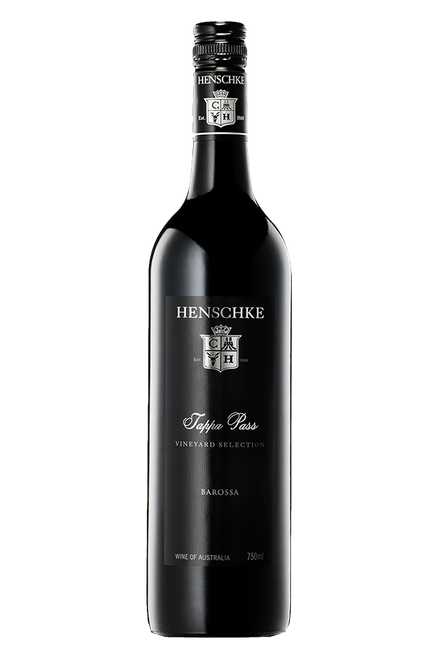

Henschke Tappa Pass Shiraz 2020 Gift Boxed
Barossa Valley,
Australia
(No reviews yet)

Write a Review
Henschke
Henschke Tappa Pass Shiraz 2020 Gift Boxed
$78.26
Free shipping when you spend over $200!
About this Wine
country
Australia
region
Barossa Valley
variety
Shiraz/Syrah
Style
Red (Full Bodied)
vintage
2020
closure
Screwcap
Alcohol vol.
14.5
volume
750
Brands
Henschke
Tasting Notes
Aroma
Bright, fragrant aromas of spiced mulberry, black cherry, red plum and raspberry, with notes of tamarillo, dried herbs, white pepper, cinnamon, mace and anise.
Maturation
Matured in 100% seasoned French oak hogsheads for 12 months prior to blending and bottling.
Appearance
Deep garnet with bright ruby hues.
Palate
A juicy and plush palate of red berries and blackcurrant is carried by savoury line of chalky tannins, finishing long with excellent balance.
Range Notes
The 2021 Stone Jar Tempranillo pays tribute to Stephen and Prue’s grandson Bosco Nicolas Henschke, second child of Johann and Angela, who was born in Spain with a congenital heart defect and passed away in 2019 at four weeks of age. He lives on in the Henschke family’s love and memories. The tempranillo grape is native to northern Spain, where Bosco’s maternal family have a long history of making wine from this variety. This single vineyard of tempranillo was planted in 2002, high in the Eden Valley, on rocky soils at the source of the North Para River. The Stone Jar name gives recognition to the German Silesian families and their rich and wonderfully varied traditions, which have been carried on for generations. Stephen’s grandfather Paul Alfred sold his wine to local customers in stone jars, which in the Barossa were known as ‘krugs’.
Vintage Notes
Average winter rains were followed by even budburst. Frost damage was significant and spring was cloudy with good rains pre-flowering, followed by short bursts of hot weather in late November. The later flowering varieties were impacted by heat at the end of November and strong winds in early December damaged the canopies although the crop remained disease free. January was dry with a burst of heat prior to a perfectly timed rain event at veraison in early February. The lead up to vintage was cool, cloudy and mostly dry with the white varieties showing balanced acidities and good aromatics. After our coolest summer for 19 years, a dry, warm autumn provided near-ideal conditions for ripening in our red varieties. Overall, the wines show great balance and potential for ageing.
You may also like



Pour it in PLUMM
Lorem ipsum dolor sit amet, consectetur adipiscing elit. Nam vulputate suscipit nisl, a suscipit justo.
Lorem ipsum dolor sit amet, consectetur adipiscing elit. Lorem ipsum dolor sit amet, consectetur
adipiscing elit. Nam vulputate suscipit nisl, a suscipit justo. Lorem ipsum dolor sit amet, consectetur
adipiscing elit.