

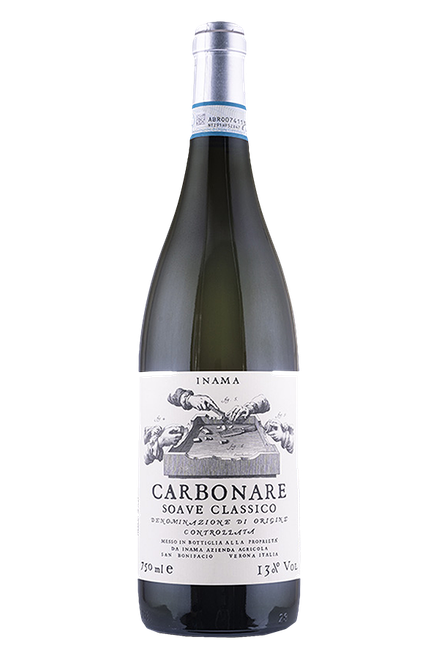

Inama Carbonare Soave Classico 2019
Veneto,
Italy
(No reviews yet)

Write a Review
Inama
Inama Carbonare Soave Classico 2019
$34.83
Free shipping when you spend over $200!
About this Wine
country
Italy
region
Veneto
variety
Other Whites
Style
White (Crisp Fresh)
vintage
2019
closure
Other
Alcohol vol.
13.0
volume
750
Brands
Inama
Tasting Notes
Aroma
Joyful aromas of citrus, effervescent acidity, mineral freshness.
Palate
A fresh, crisp wine, with marked acidity which highlights its floral character, citrusy sensations, and sharp, tangy finish. The wine is richly flavoured, with an important acidic backbone to provide balance and support to its aromatic character.
Vinification
Once arrived at the winery, the grapes are delicately crushed, and the juice then remains macerating with the skins for 3-12 hours. After 24 hours of static sedimentation, the must undergoes its alcoholic fermentation in stainless steel, after which monthly bâtonnage is carried out for one year. In November the “Soave Classico Carbonare” is bottled and remains in our cellars for a few months before being released onto the market.
Range Notes
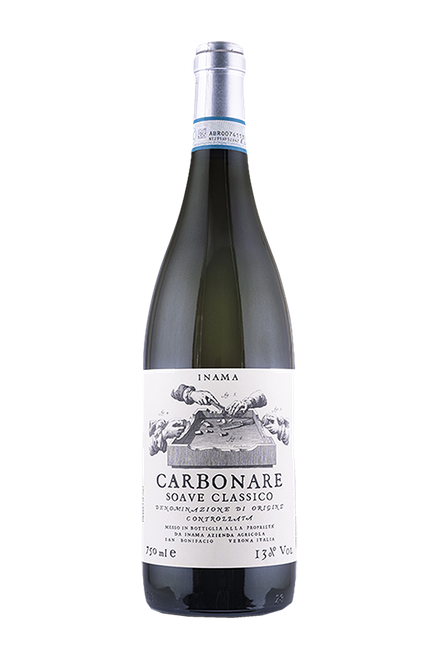
The label features a detail of “Bouchonnier – A Cork Maker’s Workshop”, showing craftsmen busy making corks. The drawing is taken from the “Encyclopédie, ou Dictionnaire raisonné des sciences, des arts et des métiers” by Diderot and D’Alembert, published in the 18th century.
Vintage Notes
After a cold, dry winter, the spring of 2019 was marked by anomalous swings in temperature and higher than average rainfall, which regenerated the water reserves in the soil. These factors led to a slight slowdown in the vegetative development of the vines and in the subsequent phases of bud growth and fruit setting. Moreover, considerable attacks of peronospora forced us to carry out prompt, targeted treatments. The situation changed drastically at the end of May, when a rise in temperatures and sunny days favored considerable growth in the vegetation. July and August were hot but not unduly so; also, sporadic rain showers cooled the air and boosted water reserves: the vines therefore remained active, recuperating some of the delay they had accumulated at the beginning of the growing cycle. September and October - the period when the aromas in the grapes evolve and their tannins ripen - were, on the other hand, ideal from a climatic point of view: these were mild, dry months, characterized also by good thermal excursions between day and night.
You may also like



Pour it in PLUMM
Lorem ipsum dolor sit amet, consectetur adipiscing elit. Nam vulputate suscipit nisl, a suscipit justo.
Lorem ipsum dolor sit amet, consectetur adipiscing elit. Lorem ipsum dolor sit amet, consectetur
adipiscing elit. Nam vulputate suscipit nisl, a suscipit justo. Lorem ipsum dolor sit amet, consectetur
adipiscing elit.